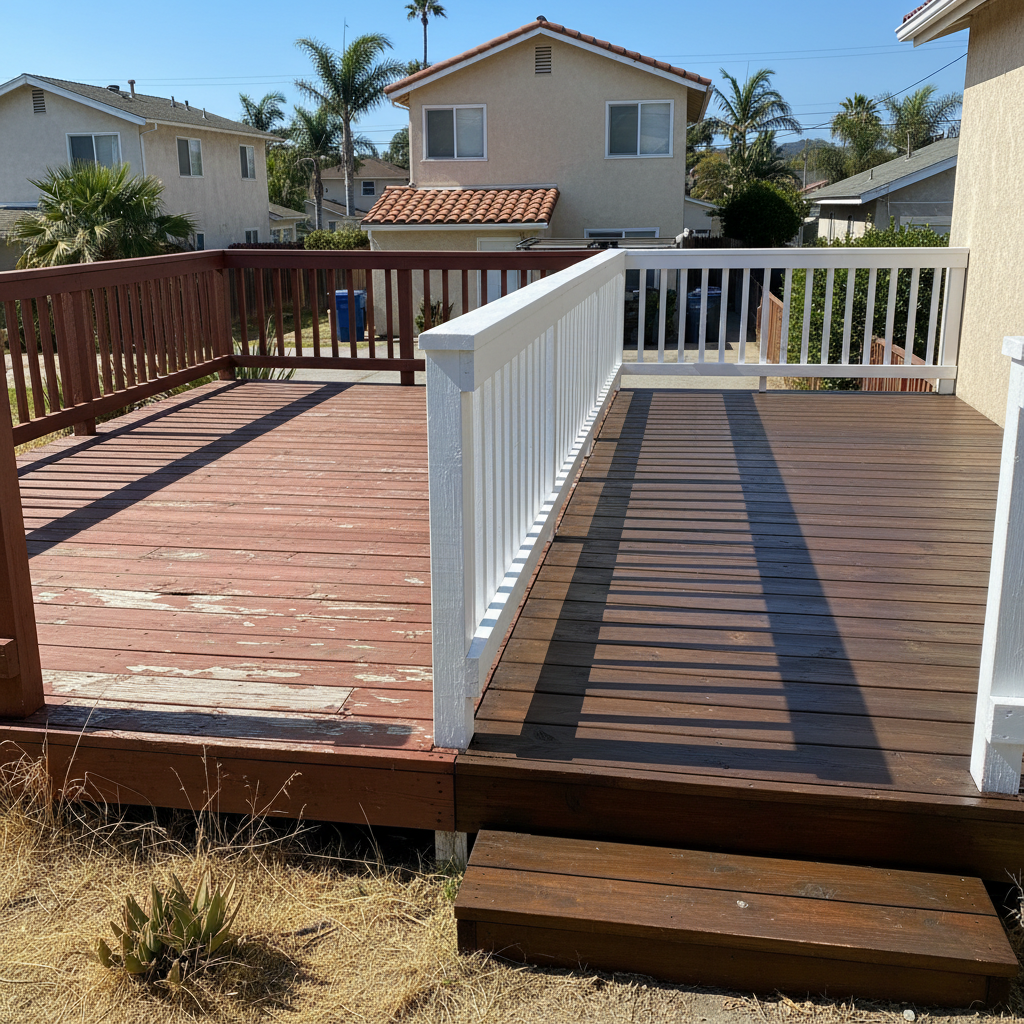
Alright, let's talk decks. Specifically, what you're going to put on 'em to keep them looking good and lasting a long time. I get this question all the time: should I paint my deck or stain it? It's not just about how it looks, you know; it's also about protection, how much work it'll be to keep up, and what you'll spend over the years. As someone who's been building and taking care of decks all over Long Beach, from the Craftsman homes in Belmont Heights to the newer places near Alamitos Bay, I've got a pretty good handle on what really holds up.
Understanding the Basics: Paint vs. Stain
First off, let's just clear up what we're even talking about here. Paint forms a thick, opaque layer right on top of the wood. Think of it like a skin. It completely covers the wood grain, giving you a solid color. Stain, on the other hand, actually soaks into the wood fibers. It can be transparent, semi-transparent, or even solid, but even those solid stains still let some of the wood's natural texture show through, which paint just doesn't do.
Appearance: What Look Are You Going For?
This is usually the first thing people consider. If you want a uniform, solid color that maybe matches your house trim or makes a bold statement, paint is definitely your best bet. You can find pretty much any color you can imagine. But, and this is a big "but," you'll lose the natural beauty of the wood. The grain, the knots, the character – all of it disappears under that layer of paint.
Stain works differently. If you love the look of natural wood, even if you want to change its tone a bit, stain is the way to go. Transparent stains simply enhance the wood's natural color and give it some UV protection. Semi-transparent stains add a little color while still letting the grain show through clearly. Solid stains give you a rich, opaque color, but you'll still see the texture of the wood, which is a nice middle ground for some folks. You won't get that super bright white or jet black like you can with paint, but you do get a more natural, organic feel – a subtle difference, but important.
Durability and Protection: Standing Up to Long Beach Life
Okay, this part is critical, especially with our coastal California weather. We don't get harsh winters, sure, but that intense summer sun and the occasional marine layer can still really beat up a deck.
Paint, because it creates that thick film, offers a really good barrier against moisture and UV rays. It's like a shield, you could say. However, that very shield can also be its downfall. When paint fails, it tends to crack, peel, and chip, especially on horizontal surfaces like a deck that get foot traffic and direct sun. Once it starts peeling, it looks terrible, and it's a real pain to fix. You're looking at scraping, sanding, and a whole lot of prep work just to get it right again.
Stain, since it soaks into the wood, doesn't form that surface film. This means it's much less likely to crack and peel. When stain wears down, it usually just fades or thins out, which is a much easier problem to solve. You can often just clean the deck and apply another coat without all that scraping. This is a huge advantage in my book. Our Long Beach sun is relentless, and paint takes a beating. I've seen countless painted decks that look great for a year or two, then start to blister and peel. Stain, on the other hand, tends to wear more gracefully.
Maintenance: Your Time and Effort
This ties directly into how durable something is. A painted deck, once it starts to fail, needs significant prep work before you can reapply anything. We're talking power washing, scraping, sanding, priming, and then two coats of paint. That's a multi-day, labor-intensive job. And you'll probably be doing it every 3-5 years, maybe even sooner if it's a high-traffic area or gets constant sun.
Stain generally requires much less maintenance. When it's time for a refresh – usually every 2-4 years for transparent/semi-transparent and 3-5 for solid – you typically just need to clean the deck thoroughly and apply a new coat. No scraping, no priming, just clean and reapply. This saves you a ton of time and effort over the long haul. Given how busy most folks are around here, less maintenance is usually a win, wouldn't you agree?
Cost: Upfront vs. Long-Term
Initially, good quality deck paint and stain are pretty comparable in price per gallon. However, the labor involved can make a big difference. Painting often requires more meticulous prep, like priming, which can add to the initial cost if you're hiring someone. If you're doing it yourself, it just adds to your time commitment.
Over the lifespan of your deck, stain usually comes out cheaper because the maintenance cycles are easier and less labor-intensive. You're not constantly battling peeling paint and all the extensive prep that demands. Think about it: a quick clean and re-coat every few years versus a full strip, sand, prime, and paint job. The savings really add up.
My Recommendation for Long Beach Decks
Look, I'm not going to tell you paint is always bad. There are specific situations where a painted deck might make sense, especially if you're going for a very particular aesthetic and are prepared for the upkeep. But for the vast majority of homeowners here in Long Beach, I'm going to steer you towards a good quality deck stain, especially a solid or semi-transparent one.
Why? Because of our climate. The sun, the occasional salt air, the temperature fluctuations – they all contribute to paint failing prematurely. Stain, particularly a high-quality acrylic-based solid stain, offers excellent protection, holds its color well, and, most importantly, wears down gracefully. When it's time for a refresh, it's a much simpler process. You get to keep some of that natural wood feel, and you'll spend less time and money fighting with your deck over the years.
If you're looking for something that's going to protect your investment, look good for longer with less hassle, and stand up to what our Long Beach environment throws at it, stain is almost always the smarter choice. We've done countless decks this way at Long Beach Deck Concepts, and our customers are always happier with the long-term results.